Roadside-picnic analogy
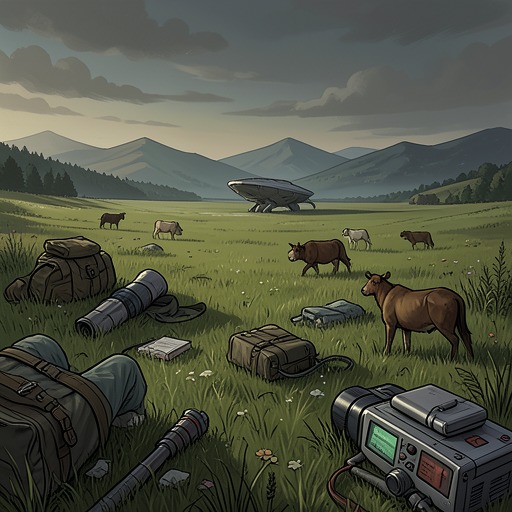
Roadside PicnicThe Roadside-picnic analogy explains the story’s central estrangement: the Visitors’ artifacts are not gifts or messages, but the accidental residue of a brief extraterrestrial visit, left behind as casually as litter after a roadside picnic. The comparison makes the Zones’ origin imaginable while emphasizing how little human beings can know about the things they find there.
An Ordinary Visit, an Alien Aftermath
The analogy begins with a deliberately mundane scene: travelers stop beside a road, picnic, and depart, leaving objects behind. Applied to the Visitors, that familiar action becomes radically disproportionate. Their visit is brief, but its discarded products remain on Earth, and their technology is so alien that earthly logic and analytical science cannot reliably explain it. The metaphor therefore offers a picture of the event’s shape, not an account of the Visitors’ intentions: the artifacts may be consequential to humanity without having been left for humanity at all.
This mismatch between casual origin and immense consequence gives the image its force. What looks like litter from the visitors’ point of view becomes the material around which human institutions and lives reorganize themselves. The analogy refuses the comforting assumption that a powerful object must have been made for its discoverers. Human beings encounter the aftermath of someone else’s ordinary activity and mistake, handle, or exploit what they cannot place in its original context.
Objects Without Instructions
The technological remnants defy familiar categories because their capacities exceed human understanding. The gap is not simply that researchers have yet to identify every object; even learning how to use one does not necessarily reveal what it is for. A discussion of the so-so illustrates the distinction: people have learned to use it and observed circumstances in which it multiplies in a process resembling cell division, yet that practical knowledge does not amount to full comprehension.
The fruit-and-buttons comparison makes the problem concrete. A creature might obtain an orange by pressing a button yet remain unable to understand what connects the button to the fruit. In the same way, successful operation of a Zone artifact can coexist with ignorance of its purpose and underlying relation to the world. The analogy thus separates instrumental control from understanding: humans may learn what an object does under certain conditions without discovering why it exists or how its makers understood it.
Institutions, Leakage, and Use
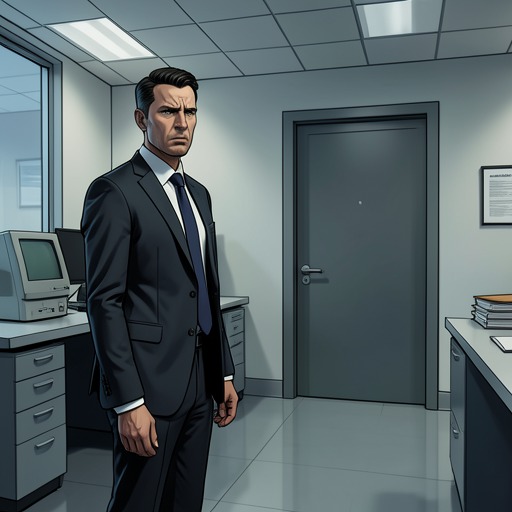
The picnic image also illuminates the social life of the remnants after their discovery. The Zones are subject to international arrangements intended to place extraterrestrial marvels in the hands of the International Institute. Valentine Pilman describes his commission work as representing the international scientific community when decisions about internationalizing the Zones arise; he distinguishes that role from studying extraterrestrial cultures directly.
Institutional custody, however, does not stop artifacts from entering other channels. Pilman says that materials steadily leak from the Visitation Zones to irresponsible individuals and organizations, and that his colleagues deal with the consequences of those leaks. The contrast between international control and persistent dispersal echoes the original image: once alien things have been scattered, no single authority can make their circulation orderly or their meaning transparent.
The distinction between an artifact’s unknown design and its known practical value also enables competing forms of appropriation. Researchers attempt to study the remnants; institutions seek to control their custody; private actors can treat them as contraband or usable resources. During Captain Quarterblad’s search of a briefcase, he lays out two small empties, nine batteries, and black sprays among the seized goods. Such inventories show the picnic’s residue translated into countable, portable objects, even though enumeration does not resolve their alien nature.
Significance
The analogy holds together wonder and warning. It imagines a visit too brief and casual to be a purposeful encounter, yet consequential enough to leave humanity with artifacts of potentially limitless capacity. The objects invite scientific curiosity and promises of human well-being, but the same struggle over them is entangled with profit, competition, and the pursuit of more terrible weapons. The roadside scene makes the imbalance stark: the Visitors have gone, while the people who find their leftovers must live with the risks and choices those leftovers create.
By making alien technology resemble abandoned picnic litter, the analogy also shifts attention from the Visitors’ unknowable intentions to the human response. The artifacts do not arrive with explanations or guarantees of benevolent use. Their meaning is made through the imperfect practices that surround them—experimentation, regulation, smuggling, and exploitation—while the fundamental distance between their makers’ world and humanity’s understanding remains.